As a global buyer in the fresh produce market, securing high-quality and cost-effective supplies consistently is paramount. When it comes to tomatoes, India stands as a major producing country, offering diverse varieties and significant export potential.
At BRP International, a trusted Indian agricultural exporter of spices, rice, pulses, fresh fruits, and vegetables, we understand the importance of seasonal sourcing. Choosing the right purchasing window can help importers manage quality, availability, pricing, and logistics more effectively.
In this guide, we explore the best season to import tomatoes from India, the major tomato-producing regions, popular export varieties, and the key factors international buyers should consider when planning their tomato imports.
Understanding India's Tomato Landscape
India has a large and diverse tomato-growing sector, with cultivation spread across different climatic zones. This geographical diversity supports multiple harvesting cycles throughout the year and makes India an important source for fresh tomatoes.
Major tomato-producing states include:
- Andhra Pradesh
- Madhya Pradesh
- Karnataka
- Gujarat
- Odisha
- West Bengal
- Maharashtra
- Chhattisgarh
Each region contributes to India's tomato supply chain, while weather conditions, planting schedules, harvesting cycles, transportation, and market demand can influence availability and prices.
Popular Tomato Varieties for Export
Different international markets require different tomato characteristics. Before importing, buyers should select varieties according to their intended application, transportation requirements, shelf-life expectations, and customer preferences.
1. Roma or Plum Tomatoes
Roma tomatoes are commonly valued for their firm texture and relatively lower moisture content. These characteristics can make them suitable for processing applications such as sauces, pastes, and canned products.
2. Cherry Tomatoes
Cherry tomatoes are popular in fresh-food markets, salads, restaurants, and gourmet applications. Their compact size, attractive appearance, and sweet flavor make them suitable for premium fresh-produce segments.
3. Hybrid Tomato Varieties
Hybrid varieties can be selected according to requirements such as yield, disease resistance, firmness, shelf life, color, and fresh-market suitability. The appropriate variety should be selected based on the destination market and transportation conditions.
Best Season to Import Tomatoes from India
Understanding India's tomato harvesting calendar is an important part of international sourcing. Tomato availability can vary between regions, so buyers should consider both seasonal trends and the specific sourcing location.
Peak Season: November to March
November to March is generally an important sourcing window for Indian tomatoes, particularly when supply from major producing regions is strong.
During this period, buyers may benefit from:
- Good availability: Harvests from several growing regions can support consistent market supply.
- Suitable quality: Cooler and comparatively drier conditions in many producing regions can support firm and visually attractive produce.
- Competitive market conditions: Higher availability can provide opportunities for cost-effective procurement.
- More predictable logistics: Weather conditions can be more manageable compared with periods affected by heavy monsoon rainfall.
- Large-volume sourcing: The period can be suitable for buyers planning regular or larger shipments.
Buyers should still evaluate current crop conditions, local prices, quality specifications, and destination-country requirements before confirming an order.
Shoulder Season: April to June and September to October
The shoulder periods can provide additional sourcing opportunities, although supply and pricing may vary by region.
April to June
As the primary winter harvest period progresses, some producing regions continue to supply tomatoes. Increasing temperatures can affect production and quality, making careful grading and supplier selection particularly important.
September to October
During the transition around the monsoon period, production begins recovering in several areas. Availability and prices can fluctuate, but buyers may find opportunities depending on the producing region and planting cycle.
Lean Season: July to August
July and August can present additional challenges because much of India experiences the southwest monsoon during this period. Heavy rainfall can affect cultivation, harvesting, transportation, and post-harvest handling.
Buyers sourcing tomatoes during this period should pay particular attention to:
- Availability and regional production levels
- Product firmness and maturity
- Shelf-life requirements
- Packaging specifications
- Cold-chain arrangements
- Transit time
- Potential price fluctuations
Imports during this period may be more suitable for specific requirements where buyers have appropriate quality-control and logistics arrangements.
India Tomato Import Season Calendar
| Period | Supply Situation | Quality Considerations | Import Strategy |
|---|---|---|---|
| November – March | Generally strong | Good conditions in many producing regions | Suitable for planned and larger-volume sourcing |
| April – June | Moderate and region-dependent | Careful selection recommended | Useful for supply continuity |
| July – August | Can be constrained | Greater attention to moisture, firmness, and shelf life | Plan carefully around availability and logistics |
| September – October | Recovering in several regions | Quality can improve as production increases | Potential opportunity before the main season |
Key Factors to Consider When Importing Tomatoes from India
Seasonality is only one part of a successful tomato import strategy. International buyers should also consider the following factors.
1. Variety Selection
Choose a tomato variety according to your target market, intended application, transportation duration, required shelf life, size, color, firmness, and customer preferences.
2. Quality Standards and Certifications
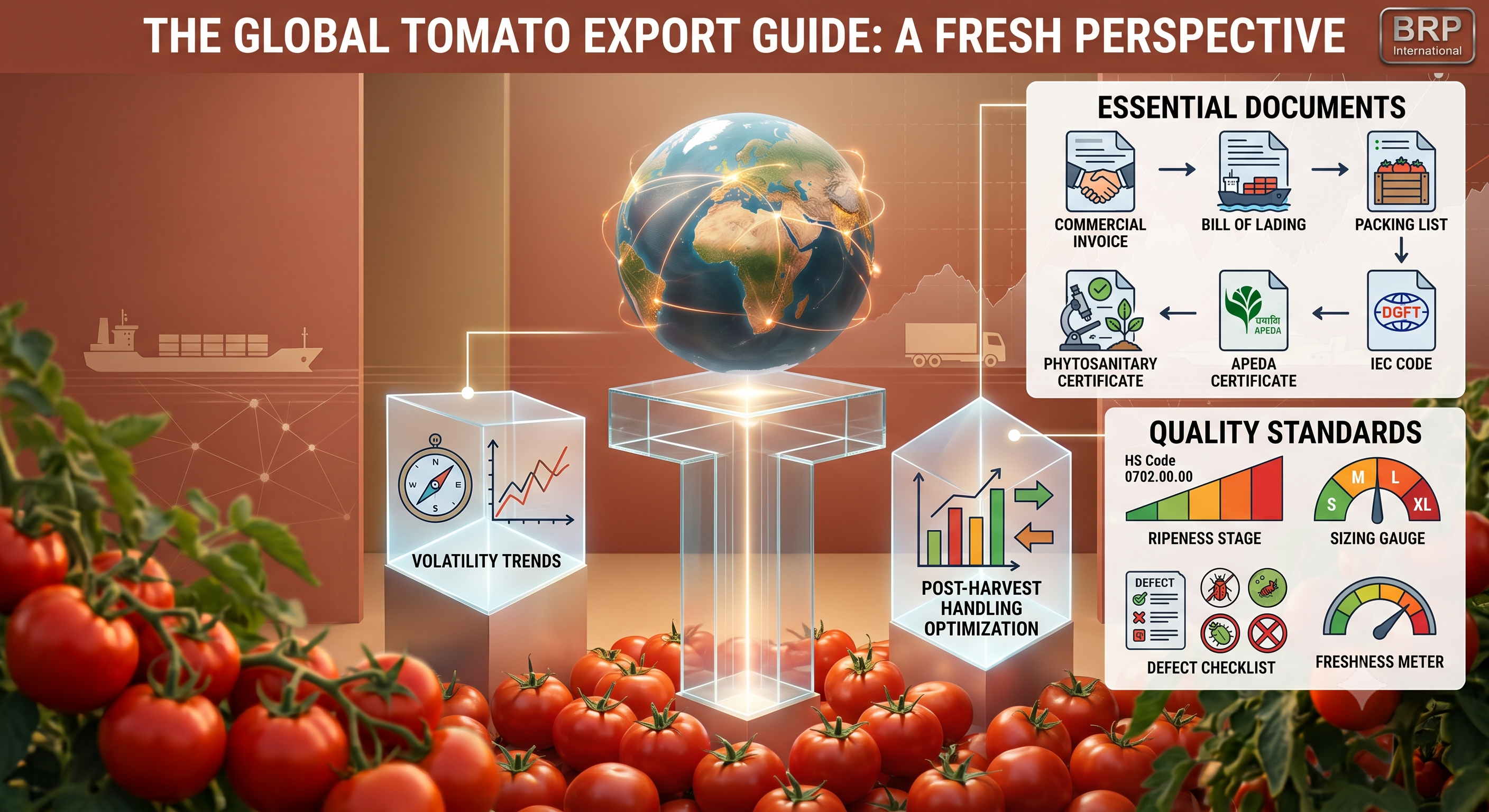
Confirm that your supplier follows the quality and food-safety requirements applicable to your destination market. Depending on the transaction and destination, buyers may require documentation such as phytosanitary certificates and relevant food-safety or quality certifications.
3. Cold Chain and Logistics
Tomatoes are perishable products, so temperature management, packaging, pre-cooling, transportation, and transit time should be planned carefully. An appropriate cold-chain strategy can help preserve product quality during international transportation.
4. Pricing and Market Conditions
Tomato prices can change according to production levels, weather conditions, domestic demand, export demand, transportation costs, fuel prices, and currency movements. Buyers should request current quotations rather than relying solely on historical seasonal prices.
5. Import Regulations
Every destination country may have different requirements concerning fresh-produce imports. Before placing an order, buyers should verify applicable customs procedures, import permits, phytosanitary requirements, labeling rules, pesticide residue limits, duties, and documentation.
6. Supplier Reliability
A reliable exporter can make a significant difference in international produce sourcing. Buyers should evaluate supplier experience, product consistency, packaging capabilities, documentation, communication, logistics arrangements, and previous export performance.
Why Choose India for Tomato Imports?
India offers several characteristics that can make it an attractive sourcing origin for international fresh-produce buyers.
- Diverse Agricultural Regions: Tomato production is distributed across multiple states and climatic zones.
- Multiple Harvesting Periods: Different production regions can contribute to supply at different times of the year.
- Competitive Sourcing Opportunities: Large domestic production can provide opportunities for international buyers depending on market conditions.
- Growing Agricultural Infrastructure: Improvements in farming, grading, packaging, storage, and transportation continue to support agricultural exports.
- International Connectivity: India's major ports provide access to international markets across the Middle East, Asia, Africa, and other regions.
BRP International: Your Partner for Indian Tomato Exports
At BRP International, we help international buyers source agricultural commodities and fresh produce from India. Our approach focuses on product quality, sourcing coordination, packaging, documentation, and international logistics.
Our Tomato Export Support Includes:
- Direct Farm Sourcing: Sourcing from established agricultural regions and supplier networks.
- Quality Control: Product inspection, grading, sorting, and packaging according to agreed specifications.
- Cold Chain Coordination: Support for appropriate pre-cooling, refrigerated transportation, and shipment planning.
- Customized Packaging: Packaging solutions based on buyer requirements, destination, product type, and shipment size.
- Export Documentation: Coordination of required documentation for international shipments.
- Reliable International Logistics: Shipment planning designed to support timely delivery and product quality throughout transit.
How to Plan Your Tomato Imports from India
- Define your requirements: Specify tomato variety, size, grade, color, quantity, packaging, and intended application.
- Identify the sourcing region: Select producing regions based on seasonality, availability, and logistics.
- Confirm quality specifications: Establish product specifications and inspection requirements before shipment.
- Compare current quotations: Evaluate pricing based on current market conditions, shipment size, packaging, and destination.
- Plan logistics: Confirm transportation, cold-chain requirements, port handling, and expected transit time.
- Verify destination regulations: Make sure all import and phytosanitary requirements are understood before shipment.
- Finalize shipment documentation: Ensure all required commercial and regulatory documents are prepared correctly.
Conclusion: Choosing the Right Season for Indian Tomato Imports
Understanding the best season to import tomatoes from India can help international buyers plan procurement around availability, quality, pricing, and logistics. The period from November to March can provide favorable sourcing conditions in many major tomato-producing regions, while other months may offer opportunities depending on regional production and market conditions.
However, seasonality should not be the only consideration. Variety, quality specifications, certifications, packaging, cold-chain management, destination regulations, pricing, and supplier reliability all play important roles in a successful import program.
By working with an experienced Indian agricultural exporter, buyers can simplify sourcing and coordinate the different stages of the international supply chain.
Looking to Import Tomatoes from India?
Connect with BRP International to discuss your tomato sourcing requirements, product specifications, packaging needs, and international shipment requirements.
Contact BRP International today to plan your next fresh tomato shipment from India.